Spotify has become much more than an audio streaming service, and it is rolling out new revenue streams to reflect that shift. In front of a room full of creators at its Now Playing event in Los Angeles, the 18-year-old platform announced a slew of fresh features, including some new content formats and a revamped Spotify Partner Program that will reward popular videos.
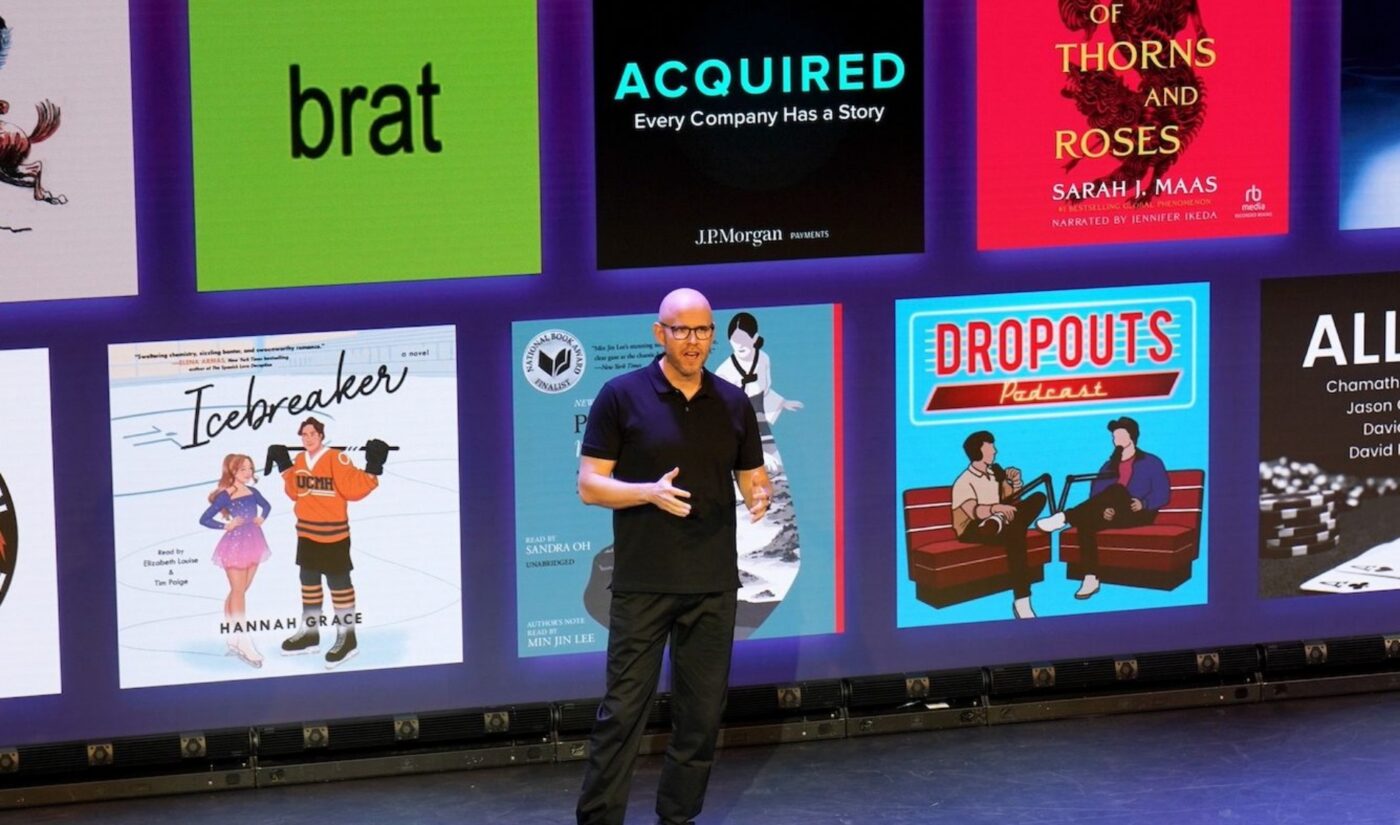
With digital luminaries like Dhar Mann, Anna Sitar, Bailey Sarian, and Rhett & Link in attendance, Spotify CEO Daniel Ek (pictured above) and his subordinates detailed the growth of video content on their platform — and their plans to keep the good times rolling. Ek’s pitch focused on formats like podcasting and video on demand, in which Spotify has invested billions of dollars.
There are plenty of stats that demonstrate the return Spotify has gotten on that investment. The number of video podcasts on Spotify has tripled year-over-year to reach 300,000, and 250 million users have streamed at least one video podcast on the platform. The rise of long-form listening and watching has increased the average amount of time spent on Spotify; in 2020, that figure stood at 30 hours per month, but it’s now approaching 40, according to Ek.
Subscribe to get the latest creator news
Spotify’s push into podcasting hasn’t come without some speed bumps, but the Stockholm-based company seems to have figured out its approach to new formats, and it is setting its creators up for future success within its ecosystem. The hub previously known as Spotify for Podcasters is evolving into Spotify for Creators, a multifaceted dashboard that will combine analytics, fan interaction, distribution tools, and multiple monetization options
Spotify’s diversifying revenue streams will be conveyed to creators through a Partner Program that resembles the similarly-named product on YouTube. Once the Spotify Partner Program opens up in January, it will pay creators through a pair of revenue streams. Partners will get a cut of earnings from ads, including the video ads Spotify has pushed over the past year. The second source of monetization is Premium Video Revenue, a performance-based system that will scale creator payouts as their videos are seen by more Spotify Premium subscribers. (Meta has brought a similar monetization format to Reels.)
The arrival of Premium Video Revenue will keep the monetization faucet running even as Spotify reduces its ad load for some users. The impending arrival of uninterrupted video podcasts will provide Premium subscribers in the US, UK, Australia, and Canada with an ad-free streaming experience.
Spotify’s ongoing push into video has made it a challenger to YouTube’s VOD empire, and the new Partner Program isn’t the only new Spotify feature that looks a lot like YouTube. Ek and co. are continuing to open up new formats to encourage the varied approach to creation that is favored on YouTube. Some creators will soon be able to cut and upload short-form clips, which will condense Spotify’s podcasts into bite-sized moments.
So, to recap: Spotify is courting video creators, introducing revenue streams tailor-made for video, and developing new ways to get video content in front of viewers. Based on those talking points, the platform’s path forward is clear: Though its audio streams will remain its bread-and-butter, it is bullish on the growth of its video ecosystem, and that community should continue to flourish in 2025.